Why Muscle Tightness Returns After Every Workout
Why Muscle Tightness Keeps Returning After Every Workout
You finish training, stretch, foam roll and feel reasonably loose — then later that day or the next morning the same muscles feel tight again.
For some people it is the hamstrings. For others it is the calves, hips, lower back or shoulders.
When muscle tightness after a workoutkeeps returning, repeatedly stretching the same area harder is not always the answer. It is often more useful to look at what keeps loading that area and whether your recovery is keeping pace with your training.
Muscle tightness after exercise can have several explanations, from normal post-workout soreness to changes in training load, repeated movement patterns and insufficient recovery.
If your tightness is closely linked to training, sports massage in Pretoria East may be one part of a broader recovery approach.
Is Muscle Tightness After a Workout Normal?
Sometimes, yes.
A hard or unfamiliar workout can leave muscles feeling stiff or sore afterwards. This is particularly common when you introduce new exercises, increase your training load or return to harder training after time off.
What matters is the pattern.
General stiffness after a demanding session that gradually settles is different from the same hamstring, calf, shoulder or section of your back tightening after almost every workout.
If the same area keeps becoming restricted, it is worth looking at your training and recovery rather than assuming that muscle simply needs more stretching.
Why Do the Same Muscles Keep Feeling Tight After Exercise?
There is rarely one universal explanation.
Common contributors can include:
increasing training volume or intensity too quickly
repeatedly loading the same muscle groups
not allowing enough recovery between demanding sessions
changing exercises or training style
returning to hard training after a break
spending much of the rest of the day sitting in one position
poor sleep or inadequate recovery
continuing to heavily load an area that is already sore or irritated
For example, tight hamstrings after a workoutcan occur after running, deadlifts, squats and other exercises that load the back of the legs heavily.
That does not automatically mean the hamstrings are “too short”, damaged or need more aggressive stretching.
The repeated pattern is more useful than the label.
Why Stretching Does Not Always Stop the Tightness Coming Back
Stretching can feel good and may temporarily improve how freely an area moves.
Foam rolling can also change how a tight area feels for a while.
But neither automatically changes the reason the muscle keeps becoming overloaded.
If the same training demands, recovery habits or repeated movement patterns remain unchanged, ten minutes of stretching may provide temporary relief without stopping the tightness from returning after the next workout.
That does not make stretching or foam rolling useless.
They are simply tools, rather than complete explanations.
If you constantly need to stretch the same muscle just to feel comfortable enough to train, it is worth looking at the bigger picture.
Can Post-Workout Massage Help With Muscle Tightness?
A post-workout massagecan be useful when muscles feel sore, stiff or restricted during recovery.
What massage should notbe sold as is a way to “flush lactic acid”, remove toxins or guarantee better athletic performance.
A more realistic reason to use massage around training is to:
work on muscles that repeatedly feel tight or restricted
reduce the sensation of muscular soreness or stiffness
help you notice recurring areas of tension
support recovery alongside sensible training, sleep and movement
Massage is one part of recovery. It is not a replacement for sensible programming.
If your problem is closely tied to training, read more about sports massage for training and recovery.
Tight Hamstrings After a Workout: Should You Just Stretch More?
Tight hamstrings after training are common because the hamstrings work hard during running, lifting, hinging and many gym exercises.
Before automatically adding more stretching, look at what changed.
Ask yourself:
Have I recently increased my running distance or speed?
Have I added more deadlifts or hamstring exercises?
Am I training hard on consecutive days?
Does the tightness happen on both sides or mainly one?
Does it ease once I move around?
Is it muscular stiffness, or is there actual pain?
Does the same area become tight every time I perform a particular exercise?
Those answers are often more useful than simply trying to stretch further.
If your hamstring tightness is accompanied by recurring lower-back tension, you may also find our guide to deep tissue back massage useful.
Sports Massage or Deep Tissue Massage for Recurring Tightness?
There is overlap between sports massage and deep tissue massage, but they are not identical.
Sports Massage
Sports massage usually makes more sense when the tightness is clearly connected to running, gym training, cycling, rugby or another repeated activity.
The session can be planned around what you train, what repeatedly feels overloaded and what you need to recover from.
Deep Tissue Massage
Deep tissue massage can be a better starting point when the main issue is persistent muscular tightness, knots or restricted movement that is not specifically related to sport.
Neither treatment should simply mean “as much pressure as possible”.
Charlton adapts pressure and the areas treated according to what you are experiencing and how your body responds during the appointment.
Deep tissue massage in Pretoria East
What Can You Do Between Workouts?
Recovery does not need to become complicated.
If the same muscles repeatedly feel tight, start with the basics:
avoid making every workout a maximum-effort session
increase training load progressively
allow recovery between demanding sessions for the same muscle groups
keep moving on recovery days rather than assuming complete inactivity is always best
prioritise sleep
eat and hydrate normally
use stretching or foam rolling if they make you feel better, without forcing painful ranges
pay attention to which exercises repeatedly trigger the same tightness
The goal is not to eliminate every sensation of post-workout stiffness.
The goal is to notice when a repeated pattern is starting to interfere with your training, recovery or everyday movement.
Does Soreness Mean You Had a Better Workout?
No.
Feeling sore after training does not automatically mean the workout was more effective.
Likewise, feeling sore after a massage does not mean the treatment “worked better”.
Some temporary tenderness can occur after deeper massage, particularly in an area that was already tight, but treatment should remain within a level you can tolerate comfortably.
More discomfort is not automatically more useful.
When Is Muscle Tightness More Than a Recovery Issue?
Massage is not the right first step for every exercise-related symptom.
Seek appropriate medical or physiotherapy assessment if you have:
sudden or severe pain
significant swelling or bruising after an injury
numbness or tingling
noticeable weakness
difficulty using or loading the area normally
symptoms that are progressively getting worse
pain that is not settling as expected
A massage therapist should not diagnose a muscle tear, nerve problem or other medical condition.
If you are unsure whether massage is appropriate, contact Charlton before booking.
Sports Massage for Workout Recovery in Pretoria East
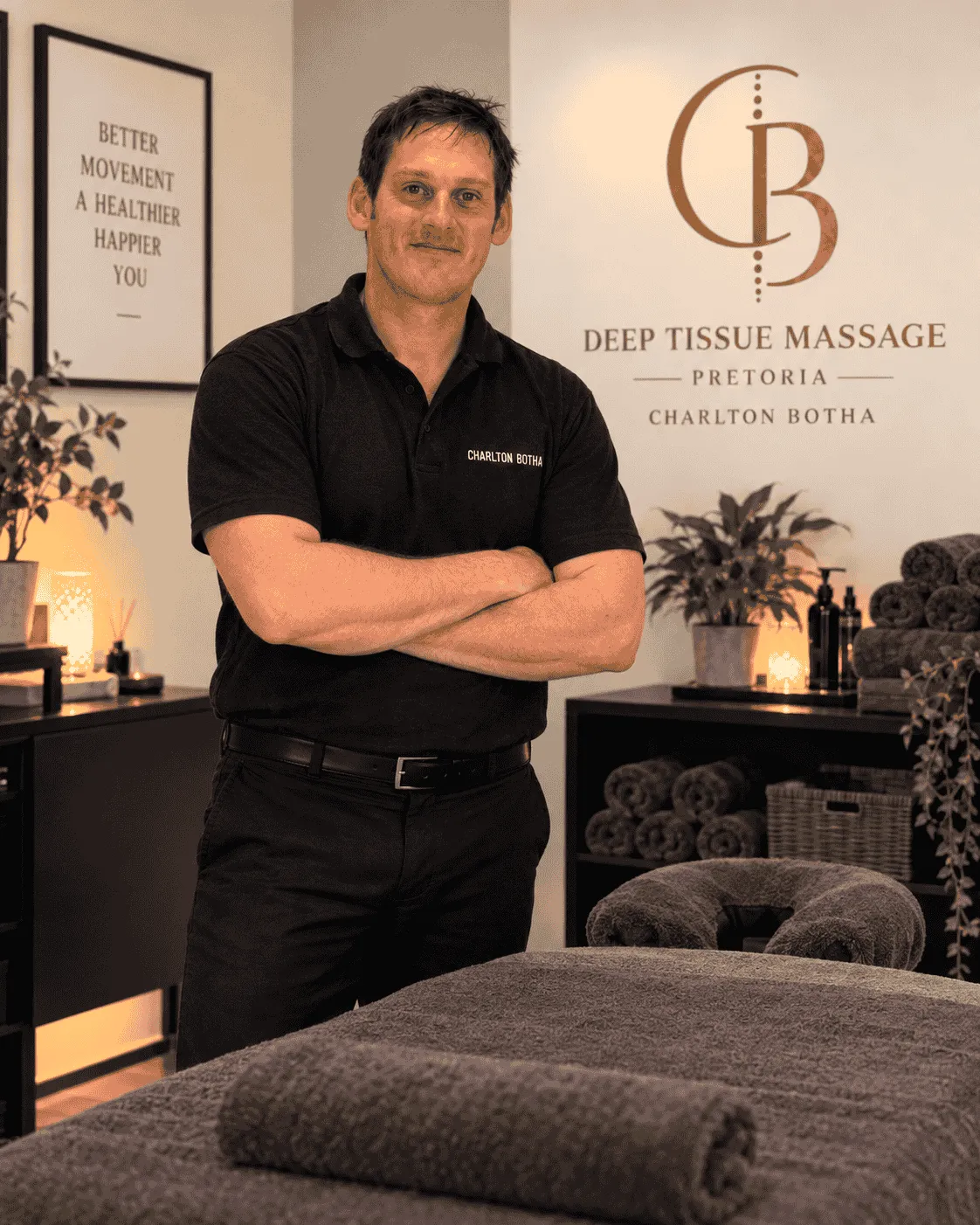
Charlton Botha provides one-to-one sports massage from a private treatment room in Silverwoods Country Estate, Pretoria East.
Every appointment is personally delivered by Charlton, who is ITEC qualified and has more than 16 years of hands-on massage experience working with clients in London and Pretoria.
Sessions are suited to runners, gym-goers and active people looking for professional massage focused around training-related muscular tightness, stiffness and recovery.
R350 · 60 minutes · By appointment
Silverwoods is convenient for Silver Lakes, Hazeldean and surrounding Pretoria East areas.
Frequently Asked Questions About Post-Workout Muscle Tightness
Why do my muscles feel tight after every workout?
Training load, repeated use of the same muscle groups, unfamiliar exercise, insufficient recovery and prolonged sitting between sessions can all contribute. If the same area repeatedly becomes tight, look at the overall pattern rather than only stretching the muscle harder.
Is sports massage good after a workout?
Sports massage can be used as part of recovery when muscles feel sore, tight or restricted. It should complement sensible training and recovery rather than replace them.
How soon after training can I have a sports massage?
There is no single rule that suits every person or every workout. The timing and pressure should reflect how demanding the session was, how you feel afterwards and what you want from the massage.
Should sports massage hurt?
No. Some areas may feel tender, but sports massage does not need to be extremely painful to be useful. Pressure should be adjusted throughout the appointment.
What if my tightness is actually painful?
If you have sudden, severe or worsening pain, significant swelling, weakness, numbness or symptoms following an injury, seek appropriate medical assessment rather than assuming it is ordinary muscle tightness.
Book a Sports Massage in Pretoria East
If the same muscles keep feeling tight every time you train, book a 60-minute appointment with Charlton and discuss the pattern before treatment begins.