Why Stretching Makes Chronic Tightness Worse (And What Your Body Is Actually Protecting)
If stretching was the answer, your tightness would be gone by now. Instead, many people stretch daily and feel temporarily looser, only to wake up tighter, stiffer, and more restricted than before. This is not a failure of flexibility or discipline. It’s a sign that stretching is being applied to a body that is actively protecting itself.
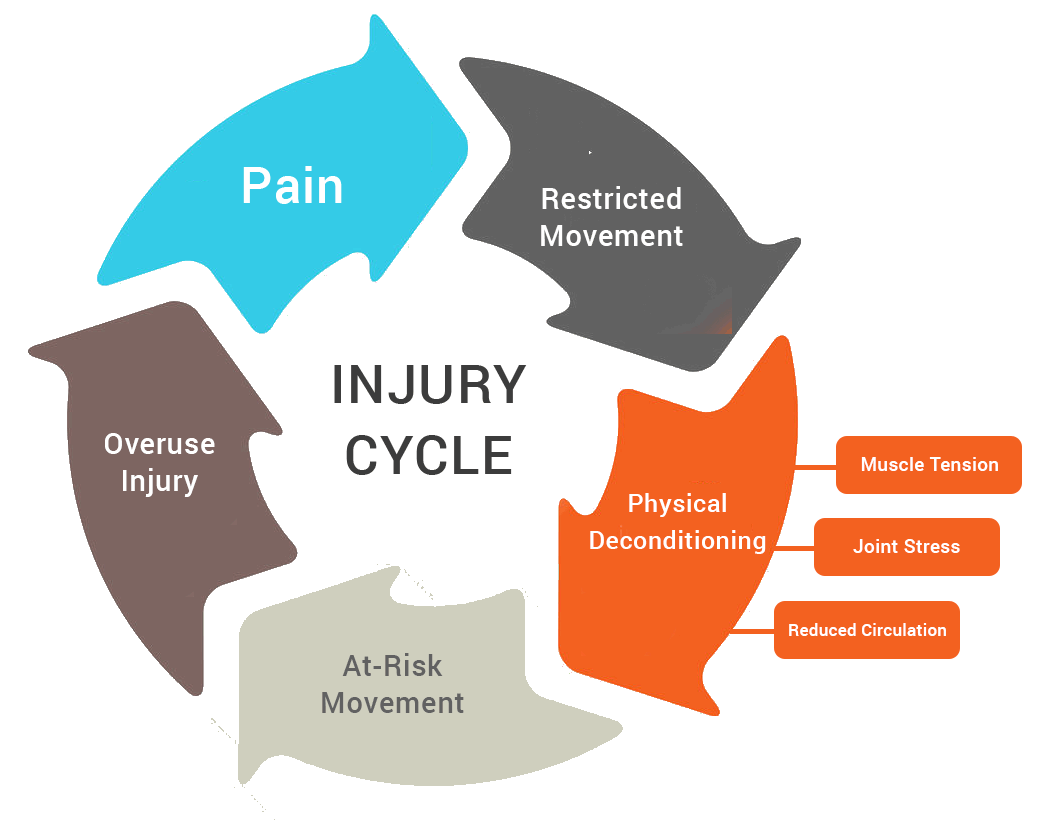
The Problem: Chronic Stiffness That Returns Daily
The defining failure point here is stiffness that resets every day. You stretch before training, after training, sometimes even before bed. You may feel a short-lived release, but by the next morning the same areas feel dense, shortened, and resistant again. Over time, stretching seems to make the tightness sharper or more aggressive, not better.
This pattern tells us the issue is no longer about muscle length.
Identity Disruption: Your Body Isn’t Tight — It’s Guarding
Chronic tightness is rarely a flexibility problem. It is a protection strategy. When the body senses unresolved internal mechanical stress, it increases tension to stabilise the area. That stress can come from fascial restriction, scar tissue from old injuries or surgeries, chronic inflammation, nerve irritation, or lymphatic congestion that has nowhere to drain.
Stretching a guarded system doesn’t reassure it. It threatens it. The nervous system interprets repeated stretching as force applied to an unsafe structure and responds by increasing tone. This is why the tighter you feel, the more you stretch, and the worse the cycle becomes.
This is also why information hasn’t worked.
Why Stretching Can Make Things Worse
Stretching works best on healthy, responsive tissue. In a chronically restricted system, tissues are often dehydrated, bound together, and congested. Pulling on them increases internal pressure rather than releasing it. The body reacts by reinforcing the protective pattern.
This is especially common in people with old injuries, post-surgical scars, recurring swelling, or long-standing compensation patterns. Stretching addresses the symptom, not the driver. The driver remains untouched.
The Clinical Framework That Breaks the Cycle: Relax → Restore → Revive
At Revive Your Body Method, chronic tightness is approached through a structured recovery framework designed for protected systems.
The first phase is Relax. This reduces defensive guarding and downshifts the nervous system so tissues stop bracing. Without this step, any attempt at change is resisted.
The second phase is Restore. This is where the real work happens. Fascial restriction is addressed, lymphatic flow is improved, scar tissue mobility is restored, and internal pressure is reduced. When tissues regain glide and fluid can move again, tightness no longer needs to exist.
The third phase is Revive. Only once the body feels safe do functional patterns get rebuilt. Strength returns through ease, movement becomes efficient again, and the need for constant stretching disappears.
This method is owner-led, backed by over 16 years of hands-on clinical experience, and focused on recovery rather than spa-style treatment. Each plan is personalised because no two protective patterns are the same.
The Boundary Most People Need to Hear
This is where self-help stops. Stretching harder, longer, or more often will not resolve a system that is protecting itself. This is why information hasn’t worked. This is what requires structured support.
When tightness persists despite effort, it is a signal that assessment—not more exercise—is needed.
Find Out What Your Body Is Actually Protecting
Instead of forcing flexibility, you can find out what’s actually driving your chronic tightness and identify whether your body needs Relax, Restore, or Revive first.
There is a low-cost diagnostic assessment designed to uncover the internal mechanics behind recurring tightness and show you why stretching has failed to deliver lasting change.
👉 Find out what your body is protecting and book your diagnostic here:
https://reviveyourbodymethod.com/calendar
Final Takeaway
If stretching makes you feel worse over time, your body is not broken—it’s intelligent. Chronic tightness is a protective response to unresolved internal stress, and it will not release until the right system is addressed in the right order.
Once that happens, flexibility returns naturally—without force, frustration, or endless stretching.