Why Does My Body Feel Stiffer After Exercise the Next Morning?
If you train, move well, and feel fine immediately after exercise—but wake up the next morning feeling tighter, heavier, or more restricted—this is not just normal soreness. When stiffness increases after rest instead of resolving, it signals that your body is struggling to recover, not adapt. This page explains why that happens and why pushing harder rarely fixes it.

The Problem — Exercise That Leaves You Worse the Next Day
Many people notice the same pattern. Training feels productive. Muscles feel worked but capable. Later that day, the body feels reasonably mobile. Then, after sleep, stiffness sets in. The back feels tighter, hips feel restricted, shoulders feel heavy, or old injuries flare up again.
This is not a sign that exercise is bad for you. It is a sign that recovery is incomplete.
Identity Disruption — This Isn’t Just DOMS or “Training Hard”
Delayed onset muscle soreness is often blamed for next-day stiffness, but true adaptation soreness resolves gradually and does not repeatedly reset after rest. When stiffness consistently worsens the morning after exercise, the issue is not effort or intensity. It is how your body processes load.
Exercise places stress through muscles, fascia, joints, and the nervous system. In a healthy system, this stress is absorbed, cleared, and rebuilt stronger. In a compromised system, unresolved restriction, poor fluid movement, or nervous system guarding prevents proper recovery. The body responds by increasing protection during rest.
Your body feels stiffer after exercise because it does not feel safe enough to integrate the load.
Why Stretching, Foam Rolling, and Cooldowns Haven’t Solved It
Stretching after training can feel helpful because it temporarily lengthens tissue and increases circulation. Foam rolling creates short-term pressure changes and sensation. Cooldowns reduce immediate tone. Yet when stiffness still returns the next morning, these tools have not addressed the underlying issue.
They do not restore fascial glide where tissue layers have become bound. They do not resolve scar-related restriction that concentrates load in specific areas. They do not normalise fluid movement that slows during rest. Most importantly, they do not downshift a nervous system that still perceives instability after training.
Relief fades because recovery never fully occurs.
What Next-Day Stiffness After Exercise Is Really Telling You
When stiffness increases overnight after training, it means exercise has exposed an existing weakness in your recovery system. This may involve restricted fascia, old injuries that cannot distribute load properly, congested fluid pathways, or compensation patterns that overwork certain areas.
During the day, movement masks these problems. At night, when movement stops, the body reassesses safety. If unresolved stress remains, protection increases. Stiffness is not punishment. It is feedback.
The Clinical Framework — Relax → Restore → Revive
At Revive Your Body Method, post-exercise stiffness is treated as a recovery failure, not a conditioning issue.
The first stage is Relax. This focuses on calming the nervous system after load so the body can exit protection mode. Without this step, tissue remains guarded and resistant to change.
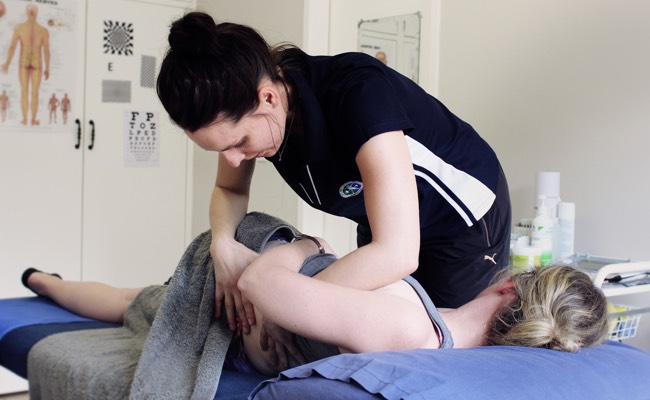
The second stage is Restore. This is where the true barriers to recovery are addressed. Fascial glide is improved, fluid movement is supported, and scar-related or tethered tissue is restored so load can be distributed properly. This stage changes how the body recovers during rest.
The third stage is Revive. Once recovery capacity is restored, movement patterns are rebuilt so exercise strengthens rather than sensitises the system. This prevents stiffness from spiking the morning after training.
Why This Is Where Self-Help Stops
This is where self-help stops. This is why information hasn’t worked. This is what requires structured support.
You cannot stretch your way into better recovery. You cannot out-train restricted tissue. You cannot foam roll a nervous system out of protection. When exercise consistently makes you stiffer the next day, skilled, hands-on intervention is required to restore recovery capacity.
The Offer — Find Out Why Your Body Isn’t Recovering Properly
Instead of reducing training, changing programmes endlessly, or assuming your body “can’t handle exercise anymore,” the most effective step is clarity. This low-cost diagnostic session is designed to identify what is blocking proper recovery and determine which stage of the Relax–Restore–Revive framework your body needs first.
You will understand why stiffness spikes after training and what must change for exercise to build you up instead of wearing you down.
👉 Find out why your body feels stiffer after exercise and where to start.
https://reviveyourbodymethod.com/calendar
How This Fits Into the Bigger Pattern
Post-exercise morning stiffness often overlaps with back seizing, hip restriction, old injury flare-ups, or overnight swelling. This page links directly back to the main pillar explanation of morning stiffness and connects with the wider cluster, showing how recovery failure expresses itself across the body.
Conclusion — Exercise Isn’t the Problem, Recovery Is
If your body feels stiffer the morning after exercise, it does not mean you should stop moving. It means your system cannot yet recover from load effectively. When the nervous system relaxes, tissue glide is restored, and recovery pathways function properly, exercise stops triggering next-day stiffness.
If training leaves you tighter every morning, your body is not asking for less effort. It is asking for structured, specialist care.
👉 Book your diagnostic and identify what your body needs to recover properly.
https://reviveyourbodymethod.com/calendar