Sports Massage vs “Just Massage”: Why Chronic Stiffness Needs a Clinical Approach
You stretch before bed, loosen up during the day, and even book regular sports massage sessions—yet every morning your body feels tight again. The stiffness hasn’t gone away; it’s simply been muted temporarily. If this sounds familiar, the issue isn’t your commitment or your consistency. The real problem is that the underlying mechanical stress driving your stiffness has never been fully addressed.
Sports massage can be powerful, but only when it is applied as part of a structured clinical recovery process rather than a standalone technique. Without that structure, relief fades and the cycle repeats.
What Sports Massage Really Is
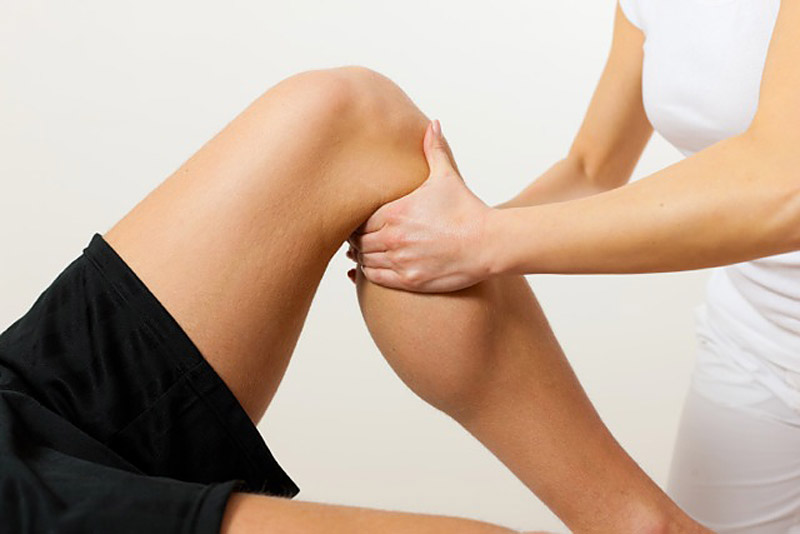
Sports massage is a targeted form of soft-tissue therapy intended to influence muscle tone, tissue quality, and movement capacity. In its true form, it is designed to reduce protective tension, restore tissue mobility, and support recovery demands placed on the body through training, work, or repetitive load.
The problem is not sports massage itself. The problem is that most treatments focus only on the area that feels tight rather than the internal reason that tightness exists in the first place. When stiffness returns daily, it is a sign that the body is still defending against unresolved internal stress.
Why Your Stiffness Keeps Coming Back After Sports Massage
Chronic stiffness is rarely caused by “tight muscles” alone. Muscles tighten as a protective response when the nervous system detects threat, instability, congestion, or unresolved tissue restriction. Scar tissue, chronic inflammation, restricted fascia, impaired lymphatic flow, and nerve irritation all create internal environments where the body feels unsafe to fully relax.
When massage is applied without addressing these drivers, the nervous system temporarily allows the muscle to soften. Once daily load resumes, the body returns to protection mode, and stiffness reappears. This is why stretching, foam rolling, and even regular massage feel helpful in the moment but never produce lasting change.
This is also why information hasn’t worked. Knowledge does not override protective physiology.
Identity Disruption: This Isn’t “Just Getting Older” or “Training Too Hard”
If stiffness returns every morning, your body is not failing you—it is protecting you. The issue is not flexibility, motivation, or discipline. The issue is that internal mechanical stressors have accumulated over time without being resolved at root level.
Your body adapts around these stressors by creating compensation patterns. Muscles shorten to stabilise restricted joints. Movement options narrow to avoid irritation. Swelling and congestion linger instead of clearing efficiently. Over time, what began as protection becomes limitation.
This is where the narrative must change. You do not need more self-help. You need structured support.
The Revive Your Body Method: Relax → Restore → Revive
At Revive Your Body Method, sports massage is not used in isolation. It is applied within a clinical recovery framework built to change how the body responds long-term.
The first phase, Relax, focuses on downshifting the nervous system and reducing defensive muscle guarding. This is not spa relaxation; it is precise, owner-led hands-on work designed to signal safety to tissues that have been locked in protection mode for years.
The second phase, Restore, targets tissue mobility, fluid movement, and internal congestion. This includes improving lymphatic flow, restoring scar mobility where present, and allowing fascia and muscle layers to move freely again. Without this phase, stiffness always returns.
The final phase, Revive, rebuilds functional movement patterns so the body can maintain freedom under load. Strength returns through ease rather than force, and movement becomes efficient instead of compensatory.
This approach is guided by over 16 years of hands-on clinical experience, delivered personally by the owner, and focused entirely on recovery rather than relaxation.

Sports Massage vs Generic Massage Therapy
Generic massage aims to make you feel better. Clinical sports massage within the Revive Your Body Method aims to change how your body functions. The difference lies in assessment, precision, and intent.
Spa-style or routine massage works locally and temporarily. Clinical recovery work addresses the system as a whole, identifying why certain areas keep tightening and why others are overworking to compensate. This is why some people feel sore relief but no progress, while others experience lasting change after fewer, more targeted sessions.
This Is Where Self-Help Stops
Stretching cannot dissolve scar-related restriction. Foam rolling cannot restore lymphatic flow. Strengthening cannot stabilise a system that is already congested and irritated.
This is why your stiffness keeps returning. This is why information hasn’t worked. This is what requires structured support.
Find Out What’s Actually Driving Your Stiffness
Before committing to ongoing treatment, the most important step is clarity. A low-cost diagnostic assessment allows you to identify what is truly driving your recurring stiffness and which pillar—Relax, Restore, or Revive—your body needs first.
This is not a generic consultation. It is a clinical evaluation designed to reveal why your body is protecting itself and what needs to change for recovery to hold.
👉 Find out what’s actually driving your stiffness and book your diagnostic here:
https://reviveyourbodymethod.com/calendar
Conclusion — Key Takeaways
Sports massage can be effective, but only when applied within a structured recovery framework that addresses the root mechanical stressors inside the body. If stiffness returns daily, the issue is not effort or consistency—it is unresolved internal protection patterns. The Revive Your Body Method exists to identify, address, and resolve these patterns through owner-led, clinical precision care in Pretoria.
This is not about doing more. It is about doing what actually works.