Lymphatic Drainage vs Deep Tissue Massage | Pretoria
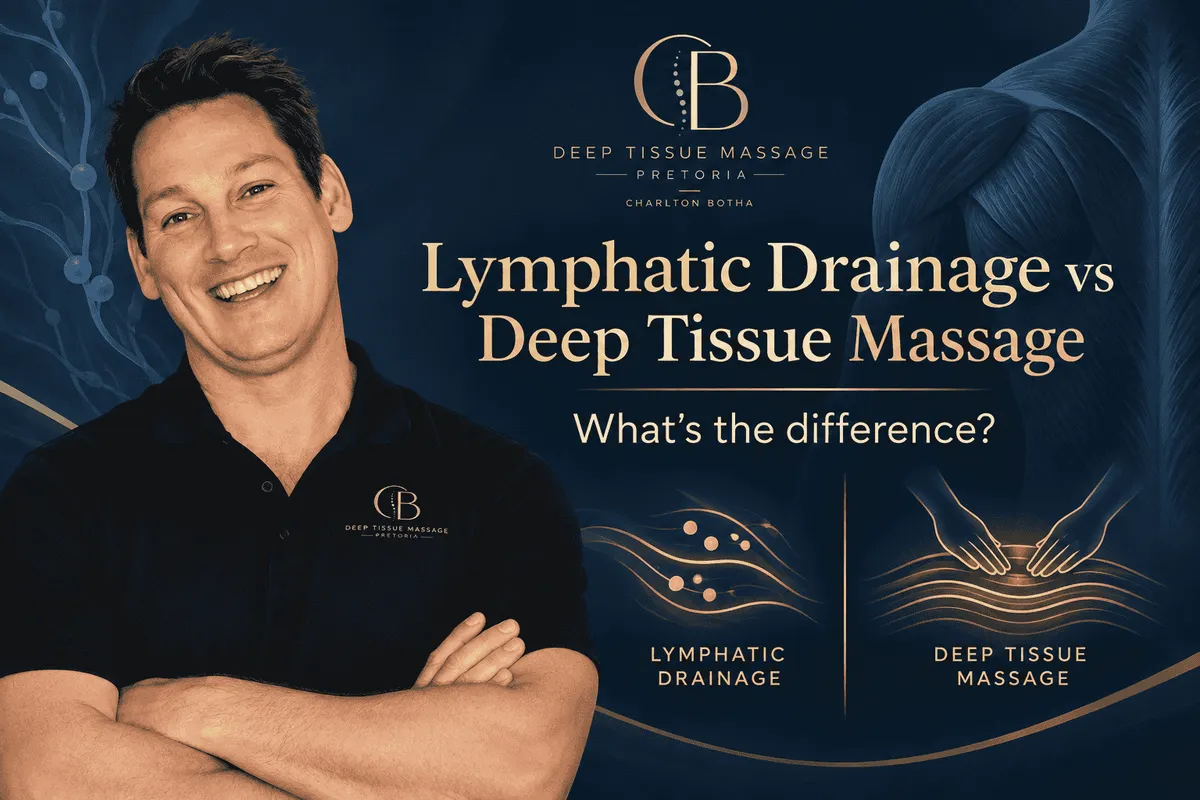
Lymphatic Drainage vs Deep Tissue Massage: What’s the Difference?
If you’re deciding between lymphatic drainage and deep tissue massage, the answer isn’t really about which treatment is “better”.
They do completely different jobs.
One works primarily with your lymphatic system and fluid movement. The other focuses more directly on muscles, fascia, tension and restricted movement.
And this matters, because booking deep tissue massage when the real problem is swelling and fluid congestion — or booking lymphatic drainage when your problem is a stubborn muscular restriction — can mean you’re using the wrong tool for what your body actually needs.
At Revive Your Body Method in Pretoria East, we offer both Manual Lymphatic Drainage (MLD) and deep tissue massage, so we’re not interested in steering everybody towards one treatment.
The question is:
What are you actually trying to change?
The quick answer: lymphatic drainage vs deep tissue massage
Manual Lymphatic Drainage | Deep Tissue Massage | |
|---|---|---|
Main focus | Lymphatic fluid movement and swelling | Muscle and fascial restriction |
Pressure | Very light and rhythmic | Firmer, slower and more targeted |
Works mainly with | Superficial lymphatic vessels | Deeper soft tissue and muscle |
Often chosen for | Swelling, fluid retention, lymphoedema management and appropriate post-operative recovery | Persistent muscular tension, stiffness, restricted movement and overworked tissue |
How it feels | Gentle, repetitive and often deeply relaxing | More intensive and focused |
Our technique | Vodder Method MLD | Clinical deep tissue techniques tailored to the individual |
That difference in pressure is not accidental.
The lymphatic vessels targeted during MLD sit relatively close to the skin, which is why specialist lymphatic drainage uses light, strategic movements rather than deep force. Clinical guidance also describes MLD as a specialised massage used to encourage lymph flow and help manage swelling.
What is Manual Lymphatic Drainage?
Manual Lymphatic Drainage, or MLD, is a specialised hands-on technique designed to encourage movement of lymphatic fluid through the body's lymphatic pathways.
It does not look or feel like a conventional massage.
Rather than pushing deeply into muscle, the therapist uses gentle, precise and rhythmic movements across the skin.
At our Pretoria East practice, Charlton is formally trained and certified in the Vodder Method of Manual Lymphatic Drainage, one of the established specialist approaches to MLD.
The light pressure matters because this treatment is not trying to reach deep muscular tissue.
It is working with a different system altogether.
MLD is commonly used as part of lymphoedema management, and specialist lymphatic drainage can be used to help move fluid away from swollen areas towards functioning lymphatic pathways.
When might Manual Lymphatic Drainage make more sense?
You may be looking at MLD rather than deep tissue massage if your main concern is things such as:
swelling or fluid retention
swollen legs, feet or ankles
lymphatic congestion
diagnosed lymphoedema where MLD is appropriate
post-operative swelling where your surgeon or medical team is happy for you to receive treatment
a feeling of puffiness rather than muscular tightness
If that sounds closer to what is happening in your body, read more about our Manual Lymphatic Drainage in Pretoria East.
What is deep tissue massage?
Deep tissue massage has a very different objective.
Here we are generally working with muscle, fascia and areas of soft-tissue restriction.
Pressure tends to be slower, firmer and more targeted because the therapist is trying to reach tissue that sits considerably deeper than the superficial lymphatic structures addressed during MLD.
But “deep tissue” does not mean simply pushing as hard as possible.
Good deep tissue work is about using the right amount of pressure, in the right place, for the right reason.
At Revive Your Body Method, Charlton adapts the treatment according to what he finds rather than performing the same routine on everybody.
When might deep tissue massage make more sense?
Deep tissue massage is more likely to fit when the main problem is:
persistent muscular tightness
restricted movement
neck, shoulder or back tension
overworked muscles from training or repetitive activity
longstanding areas of stiffness
muscular compensation following an old injury
soft tissue that feels tight, dense or restricted rather than swollen
Massage therapy may provide short-term benefit for some musculoskeletal pain conditions, although the strength of evidence varies depending on the problem being treated.
If muscular restriction is the main issue, you can also explore our deep tissue massage in Pretoria.
Why is lymphatic drainage so gentle if it is meant to be therapeutic?
This is probably the biggest misunderstanding we see.
People often assume:
More pressure = more effective treatment.
That simply isn't true when you're talking about Manual Lymphatic Drainage.
The lymphatic vessels being targeted are superficial. Heavy pressure aimed at muscle isn't what MLD is trying to achieve.
Vodder-style MLD uses controlled, rhythmic skin movements in specific directions to work with lymphatic pathways.
Cleveland Clinic similarly describes lymphatic drainage as using light pressure to move excess fluid away from tissues and towards working lymphatic vessels and lymph nodes.
So if you've booked lymphatic drainage and are wondering why the therapist isn't digging into you:
that's the point.
MLD isn't an inferior version of deep tissue massage.
It's a completely different technique for a completely different purpose.
Is deep tissue massage better for pain?
Not automatically.
It depends on why you are in pain.
If the problem is a tight upper trapezius, restricted hip tissue or muscular overload, deeper targeted work may make sense.
If the discomfort is associated with significant swelling or fluid accumulation, applying aggressive deep pressure simply because the area “hurts” may not be the appropriate first approach.
This is where assessment matters.
A symptom such as heaviness, aching or tightness doesn't tell us on its own which treatment you need.
We want to know what the tissue actually feels like, when the problem started, whether swelling is present, whether you've had surgery or injury, and how your body is behaving as a whole.
What about after surgery: lymphatic drainage or deep tissue massage?
This is one of the situations where choosing the right treatment matters most.
After surgery, swelling is part of the body's normal response to tissue injury. Depending on the procedure and your individual recovery, Manual Lymphatic Drainage may be appropriate to help manage swelling, but timing should take account of your surgeon's instructions and your medical circumstances.
Deep tissue massage is a very different proposition.
You would not simply apply strong pressure to newly healing tissue because somebody feels “tight”.
As recovery progresses, the type of hands-on work that is appropriate may change.
Someone might therefore receive MLD during one stage of recovery and more targeted soft-tissue work later.
It isn't necessarily:
MLD or deep tissue forever.
Sometimes it is:
Which one does this body need at this stage?
Can you combine lymphatic drainage and deep tissue massage?
Sometimes, yes.
But again, there should be a reason.
A person can have both muscular restriction and issues involving swelling or fluid movement.
For example, somebody recovering from injury might initially require very gentle work around an area before later benefiting from more focused muscular treatment.
What we don't do is throw every technique into every appointment because more treatment sounds better.
Different systems need different inputs.
How do I know which massage I should book?
Ask yourself what best describes the problem.
Choose Manual Lymphatic Drainage if:
Your main issue is swelling, fluid retention, puffiness or an appropriate post-operative lymphatic concern.
Choose deep tissue massage if:
Your main issue is muscular tightness, restricted movement, stubborn tension or deeper soft-tissue discomfort.
Not sure?
Don't guess.
If you aren't certain whether Manual Lymphatic Drainage or deep tissue massage is more appropriate, contact us before booking. Tell us what is happening and we'll point you towards the treatment that makes the most sense.
Why therapist training matters with MLD
Manual Lymphatic Drainage is increasingly marketed as a beauty or wellness treatment, but specialist MLD is not simply somebody performing a light massage.
Technique matters.
An understanding of lymphatic pathways matters.
Screening matters.
Knowing when not to treat matters.
Charlton Botha is Vodder-trained and certified in Manual Lymphatic Drainage, ITEC-qualified and has more than 16 years of hands-on clinical massage experience.
His professional experience also includes speaking at the Royal Society of Medicine and BAAPS, alongside years of treating clients with complex recovery and bodywork needs.
That combination matters because the objective isn't simply to perform a technique.
It is to understand which technique belongs in front of you in the first place.
Manual Lymphatic Drainage and deep tissue massage in Pretoria East
Revive Your Body Method is based in Silverwoods Country Estate, Pretoria East, close to Silver Lakes.
We offer:
Manual Lymphatic Drainage – R600 / 60 minutes
Vodder Method MLD with Charlton Botha.
Deep Tissue Massage – R600 / 60 minutes
Targeted clinical massage tailored to muscular tension, movement restriction and recovery needs.
If you're ready to book, you can book your massage appointment in Pretoria here.
If you're still unsure which treatment you need, contact us first. We'd rather put you into the right appointment than sell you the wrong one.
FAQs
Is lymphatic drainage the same as deep tissue massage?
No. Manual Lymphatic Drainage uses gentle, rhythmic skin movements designed to encourage lymphatic fluid movement. Deep tissue massage uses firmer, more targeted techniques aimed primarily at deeper muscle and soft tissue.
Is lymphatic drainage supposed to hurt?
No. MLD should generally be gentle. The lymphatic structures being targeted are relatively superficial, so heavy pressure is not necessary for specialist lymphatic drainage.
Which is better for swelling: lymphatic drainage or deep tissue massage?
When swelling is related to lymphatic fluid accumulation and MLD is appropriate for the individual, specialist Manual Lymphatic Drainage is the treatment specifically designed to work with lymph flow. Persistent, unexplained or sudden swelling should be medically assessed rather than simply treated with massage.
Which is better for tight muscles?
If the issue is primarily muscular tightness or deeper soft-tissue restriction, deep tissue massage will generally be the more relevant of the two techniques.
Can I have lymphatic drainage after surgery?
It may be appropriate after some procedures, but timing depends on the operation, your healing and your medical team's instructions. We screen post-operative clients and may ask for medical or surgical clearance before treatment.
About Charlton Botha
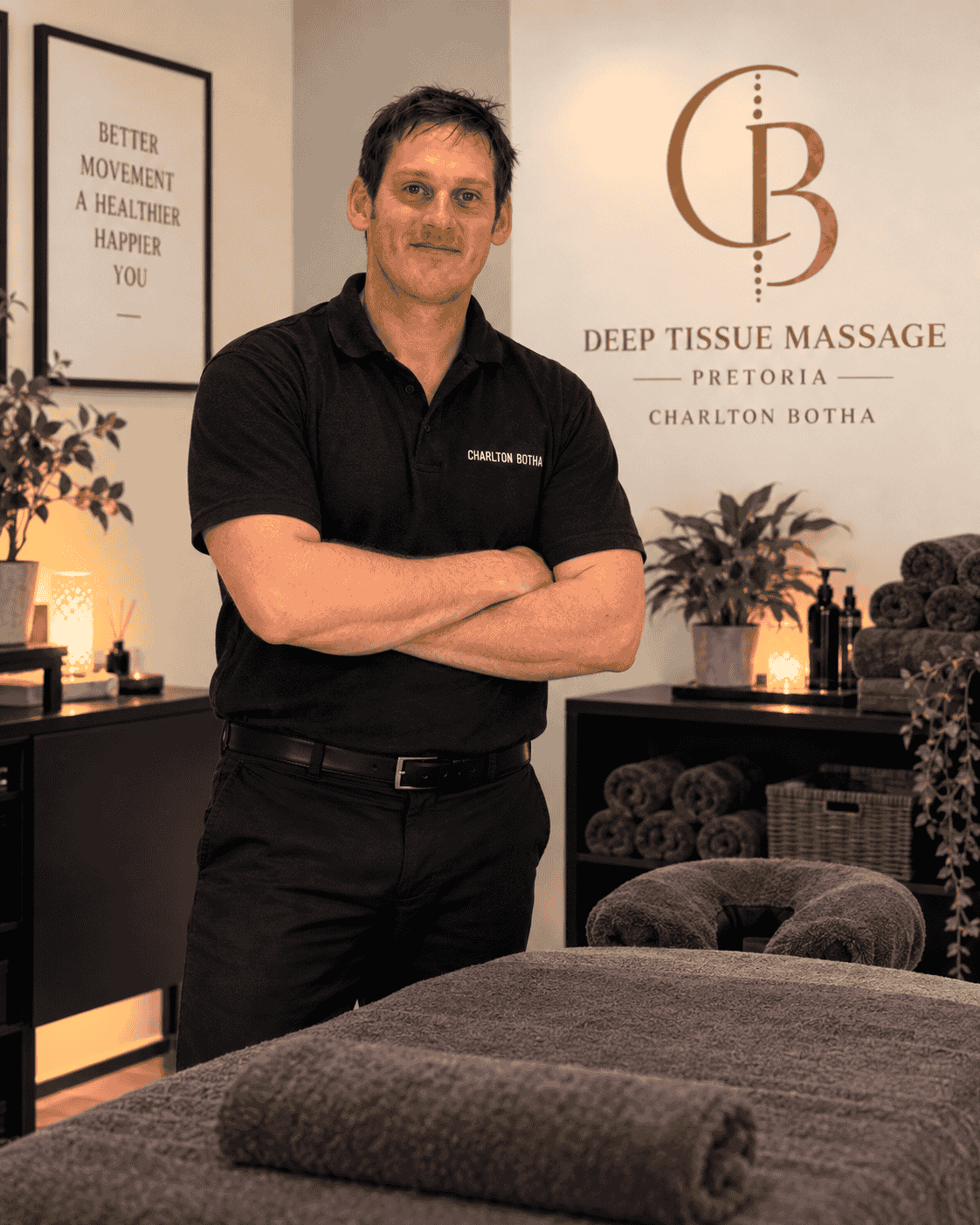
Charlton Botha is an ITEC-qualified clinical massage therapist with more than 16 years of hands-on experience. He is formally trained and certified in the Vodder Method of Manual Lymphatic Drainage and provides specialist deep tissue, sports and lymphatic massage from Revive Your Body Method in Pretoria East.